As environmental regulations become stricter, industries face increasing pressure to manage their wastewater responsibly. The goal of zero liquid discharge (ZLD) is now a vital target for sustainable operations. A key technology making this goal achievable is the agitated thin film dryer (ATFD). This advanced equipment is a cornerstone of modern effluent treatment, providing an effective solution to evaporate the final liquid from industrial waste streams and leaving behind only a dry, manageable solid.
Table of Contents
Key Highlights
- An agitated thin film dryer (ATFD) is a critical technology in modern effluent treatment plants (ETPs).
- It plays a central role in achieving zero liquid discharge (ZLD) by converting concentrated liquid waste into a solid, dried product.
- The system uses high-efficiency heat transfer to evaporate remaining water content from slurries and pastes.
- Its design is ideal for the wastewater treatment of heat-sensitive materials.
- Integrating an ATFD ensures environmental compliance and promotes sustainable water management.
Understanding Agitated Thin Film Dryer (ATFD) in Effluent Treatment Plants (ETP)
An agitated thin film dryer is a specialized piece of equipment designed for the final stage of wastewater treatment in effluent treatment plants. Its primary function is to take highly concentrated liquid waste, often in slurry or paste form, and complete the drying process.
The ATFD works by spreading the material in a thin layer across the surface of the dryer, where heat is applied to evaporate the remaining liquid. This process efficiently converts challenging liquid effluents into a dry, free-flowing powder. You will learn more about its specific functions and the types of waste it can handle.
Core Functions of ATFD in ETPs
Agitated Thin Film Dryers (ATFDs) play a crucial role in ETPs by ensuring efficient heat transfer and rapid evaporation. They utilize a compact design with continuous agitation, which allows for low residence time and prevents thermal degradation of sensitive products. The heated surface enhances the heat transfer coefficients, leading to improved drying processes. Additionally, ATFDs handle a wide range of materials, making them ideal for various industries, such as pharmaceuticals and food processing, while contributing to higher product quality and reduced liquid discharge.
Types of Waste Streams Suitable for ATFD Application
The versatility of ATFD technology allows it to handle a wide variety of waste streams across various industries. Its ability to operate under vacuum makes it especially suitable for processing heat-sensitive products that would degrade under high temperatures. The feed material can range from solutions and slurries to thick pastes.
What types of waste streams are best treated with ATFD technology in ETPs? Industries that generate complex liquid waste find ATFDs particularly beneficial. This includes:
- Pharmaceutical Industry: For drying effluents containing active pharmaceutical ingredients (APIs) and other hazardous compounds.
- Chemical Industry: To process waste streams with high concentrations of salts, organic chemicals, and other impurities.
- Textile Industry: For managing wastewater containing dyes, salts, and finishing chemicals.
- Food Industries: To concentrate and dry by-products like vegetable extracts and sweeteners.
The robust design ensures that even viscous and sticky materials can be processed effectively. This capability makes the ATFD a go-to solution for many challenging industrial effluent applications, transforming problematic liquid waste into a manageable solid form.
Operating Principles of ATFD Technology in Industrial Wastewater Management
The fundamental operating principle of an agitated thin film dryer is the creation of a thin, turbulent film of material on a heated surface. This method maximizes heat transfer efficiency, allowing for a rapid and controlled drying process that is essential for many industrial processes.
By continuously agitating the material, the thin film dryer prevents fouling and ensures that the entire volume of feed is evenly exposed to heat. This results in the complete evaporation of liquids, leaving behind a dry, solid product. These principles are key to its effectiveness, as we will explore in the process and operational flow.
Thin Film Drying Process Explained
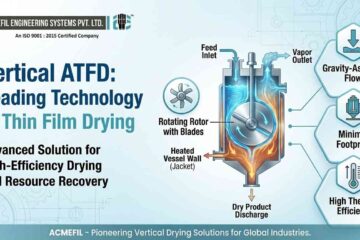
The thin film drying process in an ATFD is a continuous, single-pass operation. The journey begins when the liquid feed is introduced into the dryer, typically at the top. A distributor ensures the feed is spread evenly around the inner circumference of the cylindrical body.
As the material moves downward, a high-speed rotor equipped with blades makes contact with it. These blades spread the liquid into a very thin film on the heated surface of the dryer’s wall. This thin film formation is the key to the equipment’s high heat transfer rate, which fuels rapid evaporation of the water or solvent content.
The intense agitation creates turbulence, constantly renewing the film and preventing any part of the product from overheating. Vapors rise and exit through a separate outlet for condensation, while the solid particles continue to the bottom of the dryer. The final dried powder is then collected, completing the drying process efficiently and quickly.
Step-by-Step Flow of ATFD Operation within an ETP System
The operation of an ATFD within an ETP follows a clear, sequential flow designed for continuous operation. The process is carefully controlled by managing parameters like feed rate and heating temperature to ensure the wet material is converted into a consistent dried product. The goal is to eliminate any final liquid discharge.
This systematic approach guarantees that the effluent is processed efficiently. The journey from concentrated liquid to dry powder involves several distinct phases within the dryer.
The step-by-step flow is summarized below:
| Step | Action | Purpose |
|---|---|---|
| 1. Feeding | Wet material is pumped into the top of the ATFD. | To begin the continuous drying process. |
| 2. Film Formation | Rotor blades spread the feed into a thin layer. | To maximize surface area for heat transfer. |
| 3. Evaporation | The heated wall vaporizes the liquid from the film. | To separate the liquid and solid components. |
| 4. Collection | The dried product is discharged at the bottom. | To collect the final solid waste for disposal. |
Integration of ATFD with Zero Liquid Discharge (ZLD) Systems
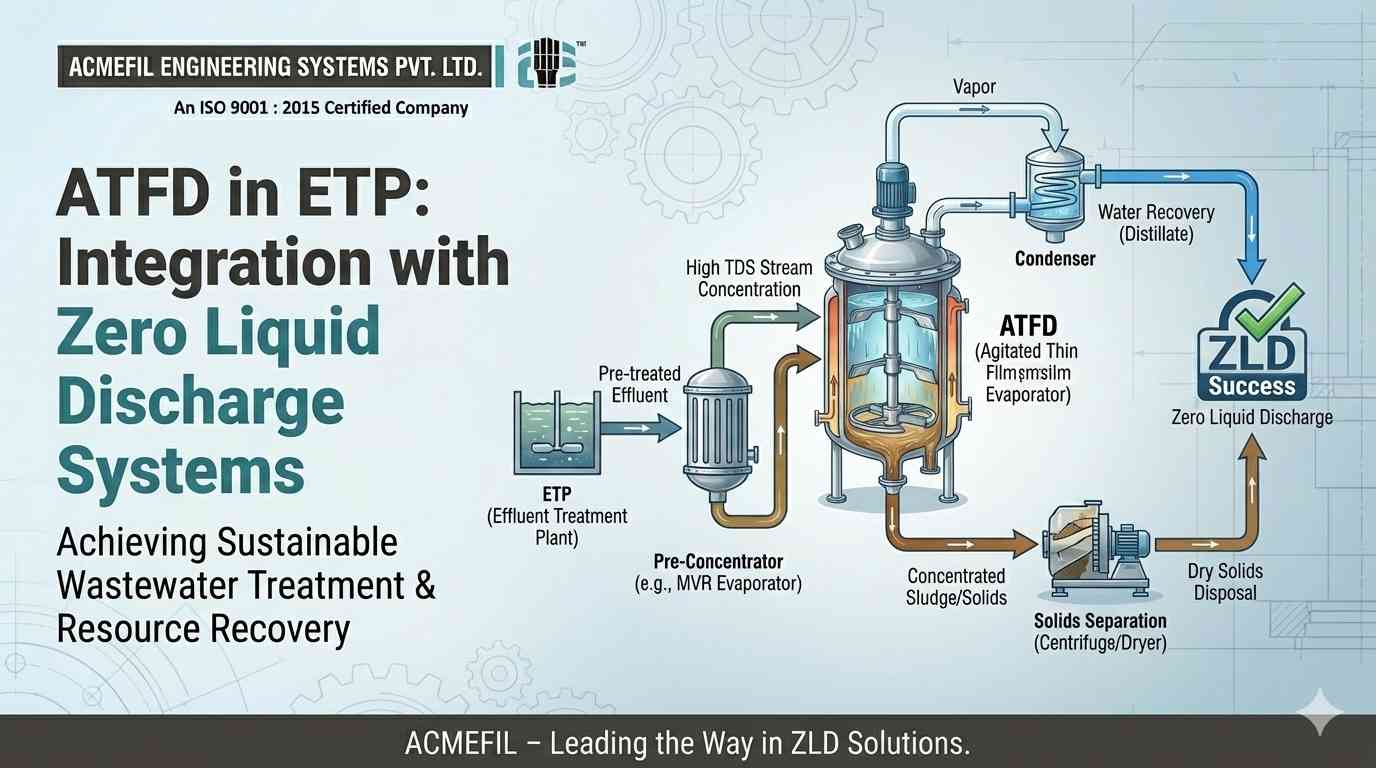
Achieving true zero liquid discharge is the ultimate goal of a modern wastewater treatment strategy. The integration of an agitated thin film dryer is often the final and most critical step in realizing this objective. After wastewater is pre-concentrated using methods like reverse osmosis or multiple-effect evaporators, a highly concentrated brine or slurry remains.
This is where the ATFD comes in. It takes this final liquid stream and completes the job by evaporating all remaining water, leaving only solid waste. This eliminates the need for any liquid discharge system, ensuring full compliance with ZLD standards.
Key Steps for Combining ATFD and ZLD Processes
Integrating the agitated thin film dryer (ATFD) with zero liquid discharge (ZLD) systems involves systematic steps. First, assess the feed material’s properties, including water content and chemical composition. Next, ensure the ATFD’s design facilitates efficient heat transfer and continuous operation, enhancing rapid evaporation. Additionally, consider using a falling film evaporator to optimize energy efficiency while minimizing thermal degradation. Finally, monitor product quality to ensure the dried product meets industry standards, ultimately achieving a sustainable liquid discharge solution.
System Design Considerations in New York, United States
When integrating an ATFD into an ETP system, several key design considerations are crucial for optimal performance, regardless of the location. The design of ATFDs must be tailored to the specific characteristics of the waste stream, including its viscosity, solids content, and heat sensitivity.
A primary consideration is the material of construction. High-grade materials like stainless steel are often used to resist corrosion from aggressive effluents and withstand high temperatures. The heat transfer area is another critical factor; it must be large enough to handle the required evaporation load efficiently. The rotor design, including the type and clearance of the blades, must also be optimized for the feed material to ensure proper film formation and prevent fouling.
Furthermore, the compact design of most vertical ATFDs makes them suitable for facilities with limited space. Proper system design ensures that the ATFD integrates seamlessly with upstream processes, like evaporators, and downstream solid handling equipment, making it a reliable solution for various industrial applications.
Benefits of Using ATFD in Industrial ETPs
Using an agitated thin film dryer in an industrial ETP offers significant advantages. The technology is known for its high efficiency in converting liquid waste into a manageable solid. This is achieved through a rapid and controlled drying process that maintains excellent product quality, especially for sensitive materials.
The ability to run in a continuous operation mode means it can handle a consistent flow of waste, making it a reliable part of the overall treatment system. These benefits lead to improved energy efficiency and better environmental outcomes, which we will explore further.
Efficiency and Energy Savings of ATFD Technology
Are there energy saving advantages of using ATFD in an industrial ETP? Yes, one of the most compelling benefits of ATFD technology is its energy efficiency. The design principle of creating a thin film maximizes the surface area available for heat exchange, leading to very high heat transfer rates. This means the drying process can be completed quickly and with less thermal energy compared to many conventional drying methods.
This high efficiency translates directly into low energy consumption. The short residence time—the brief period the product spends inside the dryer—also contributes to energy savings, as heat is applied for only a few seconds. This is a stark contrast to batch drying or other industrial processes that require prolonged heating.
By optimizing the use of thermal energy, an ATFD helps reduce the overall operational costs of an ETP. For industries looking to minimize their carbon footprint and utility expenses, the energy savings offered by ATFDs make them an attractive and sustainable investment.
Environmental Impact and Compliance with ZLD Requirements
How does integrating ATFD with Zero Liquid Discharge Systems benefit wastewater treatment? The integration of an ATFD is a game-changer for environmental compliance. Its primary benefit is enabling facilities to achieve true zero liquid discharge. By converting the final concentrated effluent into a solid, it completely eliminates the discharge of industrial wastewater into rivers, lakes, or municipal sewer systems.
This has a significant positive environmental impact by preventing water pollution and protecting local ecosystems. It also brings facilities into full compliance with the strictest environmental regulations, avoiding potential fines and legal challenges associated with liquid discharge. The process transforms a hazardous liquid into a smaller, contained volume of solid waste that is safer and easier to manage.
Ultimately, using an ATFD as part of a ZLD strategy demonstrates a strong commitment to sustainable practices. It not only solves a critical wastewater treatment challenge but also helps in conserving water resources by allowing the recovered and condensed vapor to be reused within the plant.
Frequently Asked Questions (FAQ)
What is ATFD in ETP?
ATFD, or Agitated Thin Film Dryer, is crucial in various industrial applications for efficiently reducing liquid waste. It operates through rapid evaporation and provides high heat transfer rates, resulting in high-quality dried products. How does ATFD enhance zero liquid discharge (ZLD) systems?
By integrating ATFD in ZLD systems, industries can minimize environmental impact while achieving energy efficiency. The thin film formation and continuous agitation allow for effective heat transfer, ensuring gentle handling of sensitive products and optimal drying processes.
What maintenance is required for ATFD units in ETPs?
Maintenance for an agitated thin film dryer is typically low due to its self-cleaning design. The rotor blades continuously scrape the surface of the dryer, preventing material buildup. Routine maintenance involves checking the motor, gearbox, and mechanical seals, but the core drying process requires minimal intervention compared to other industrial processes.
How does ATFD compare to other evaporator technologies?
An agitated thin film dryer excels where a multiple effect evaporator or thin film evaporator cannot. While other evaporators are great for initial water removal, an ATFD is designed to handle highly viscous slurries and dry them to a final solid powder, ensuring superior final product quality with minimal thermal degradation.
Are there any notable pilot projects of ATFD in wastewater treatment?
While specific pilot projects are numerous, the agitated thin film dryer has moved well beyond the pilot stage in wastewater treatment. It is a proven and widely adopted technology in many industrial applications, especially for companies implementing zero liquid discharge systems to meet stringent environmental regulations across the chemical, pharmaceutical, and textile sectors.
Frequently Asked Questions
What is ATFD and how does it function within ETP systems?
An agitated thin film dryer (ATFD) is equipment that completes the final drying process in wastewater treatment. It functions by spreading concentrated effluent into a thin film on a heated wall. High-speed blades ensure efficient heat transfer, causing rapid evaporation and turning the liquid into a dry solid.
How does integrating ATFD with Zero Liquid Discharge Systems benefit wastewater treatment?
Integrating an agitated thin film dryer is the final step to achieving true zero liquid discharge. It eliminates the last liquid discharge system by converting concentrated brine into a solid. This minimizes environmental impact, ensures regulatory compliance, and improves the final product quality of the entire treatment process.
What are the key challenges when implementing ATFD in ETP systems with Zero Liquid Discharge?
Key challenges in implementing an agitated thin film dryer for zero liquid discharge include accurately characterizing the liquid waste to ensure proper design, managing variable feed consistency, and handling highly viscous or sticky materials. Proper pre-treatment before the final drying process is crucial for efficient and trouble-free operation.
Can you explain the environmental impact of using ATFD in conjunction with Zero Liquid Discharge systems?
The main environmental impact is highly positive. Using an agitated thin film dryer in a zero liquid discharge system prevents industrial effluents from polluting water bodies. It helps conserve water by enabling reuse and safely contains contaminants in a manageable solid form, protecting ecosystems and improving overall product quality.
Conclusion
In conclusion, the integration of Agitated Thin Film Dryer (ATFD) technology with Zero Liquid Discharge (ZLD) systems presents a significant advancement in the realm of industrial wastewater management. By understanding the core functions and operating principles of ATFD, industries can leverage its efficiency and energy-saving capabilities while ensuring compliance with stringent environmental regulations.
The benefits extend beyond operational improvements to profound impacts on sustainability and environmental protection. As industries continue to seek innovative solutions to manage wastewater effectively, the adoption of ATFD within ZLD frameworks marks a pivotal step towards responsible resource utilization. If you have questions or are interested in exploring how ATFD technology can benefit your operations, get in touch with us for further assistance.