The global industrial drying equipment market reached $6.2 billion in 2023, with thin film dryers representing one of the fastest-growing segments due to their exceptional efficiency in handling heat-sensitive materials. If you’re working in chemical processing, pharmaceuticals, or food production, understanding what an ATFD (Agitated Thin Film Dryer) can do for your operations could revolutionize your drying processes and dramatically reduce your operational costs.
An ATFD represents a breakthrough in industrial drying technology, offering unparalleled performance for materials that traditional drying methods simply cannot handle effectively. This comprehensive guide will walk you through everything you need to know about thin film dryers, from their fundamental operating principles to their specific applications across various industries.
Table of Contents
Understanding the Fundamentals of ATFD Technology
What Exactly is an ATFD?
An Agitated Thin Film Dryer (ATFD) is a specialized piece of industrial equipment designed to remove solvents and moisture from heat-sensitive, viscous, or sticky materials through the formation of a thin film on a heated surface. The system operates under vacuum conditions, allowing for lower temperature processing while maintaining high efficiency rates.
The core principle revolves around creating an extremely thin layer of material—typically 0.5 to 3 millimeters thick—on a heated cylindrical surface. This thin film formation maximizes the surface area exposed to heat while minimizing the residence time, making it ideal for materials that would degrade under prolonged heat exposure.
Key Components and Design Features
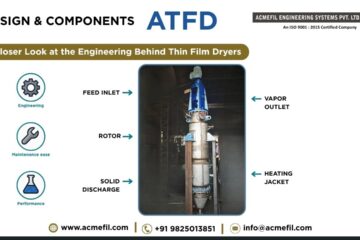
The ATFD system consists of several critical components working in harmony. The main body features a heated cylindrical vessel, typically constructed from stainless steel or other corrosion-resistant materials. Inside this cylinder, a rotor assembly with specially designed wipers continuously spreads the feed material into a thin film while simultaneously scraping the dried product from the heated surface.
The heating system usually employs steam, hot oil, or electrical heating elements to maintain precise temperature control. The vacuum system creates the low-pressure environment necessary for efficient solvent removal at reduced temperatures. Additionally, a condenser system recovers valuable solvents for potential reuse, making the process both economical and environmentally friendly.
How ATFD Technology Works
The process begins when feed material enters the dryer through the top inlet. The rotating wiper system immediately spreads this material into a uniform thin film across the heated surface. The combination of heat transfer and vacuum conditions causes rapid evaporation of moisture and solvents from the thin film.
The dried material continuously moves downward due to gravity and the wiping action, eventually collecting at the bottom outlet. Meanwhile, the evaporated solvents travel to the condenser system where they condense back into liquid form for recovery or safe disposal. This continuous process ensures consistent product quality and high throughput rates.
The Science Behind Thin Film Drying
Heat Transfer Mechanisms
Thin film drying operates on the principle of enhanced heat transfer through maximum surface area exposure. Unlike conventional drying methods where heat must penetrate through thick layers of material, the thin film approach ensures that virtually every molecule of the product receives direct heat exposure.
The heat transfer coefficient in thin film dryers typically ranges from 200 to 800 W/m²K, significantly higher than conventional dryers. This enhanced heat transfer results from the combination of forced convection created by the rotating wipers and the minimal thickness of the material layer.
Mass Transfer Optimization
The mass transfer process in ATFDs benefits from the large surface area to volume ratio created by the thin film formation. The vacuum environment reduces the partial pressure of the evaporating components, accelerating the drying process while preventing thermal degradation.
The residence time distribution in thin film dryers approaches plug flow conditions, meaning all material spends approximately the same amount of time in the system. This characteristic ensures uniform drying and prevents both over-processing and under-processing of the material.
Types and Variations of ATFD Systems
Vertical vs. Horizontal Configurations
Vertical ATFDs represent the most common configuration, utilizing gravity to assist material flow while maintaining optimal heat transfer. These systems typically handle feed rates from 10 to 10,000 kg/hr, depending on the size and application requirements.
Horizontal ATFDs offer advantages for specific applications, particularly when handling materials with unusual flow characteristics or when space constraints favor horizontal installation. The horizontal design often provides better mixing characteristics for certain materials.
Single-Stage vs. Multi-Stage Systems
Single-stage ATFDs handle most standard drying applications effectively, providing sufficient solvent removal for final products meeting specifications. These systems offer simplicity in operation and maintenance while delivering excellent performance for straightforward drying tasks.
Multi-stage systems become necessary when extremely low residual solvent levels are required or when handling particularly challenging materials. Each stage operates at progressively higher temperatures or deeper vacuum levels, achieving final moisture contents below 0.1% in many cases.
Industrial Applications and Use Cases
Chemical Processing Industry
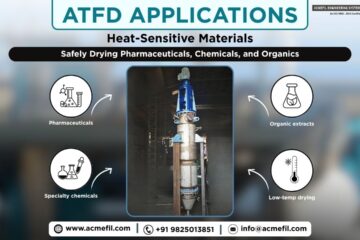
The chemical industry represents the largest market segment for ATFD technology, utilizing these systems for concentrating solutions, recovering solvents, and producing high-purity chemicals. Pharmaceutical intermediate production particularly benefits from the gentle drying conditions that preserve molecular integrity.
Chemical companies use ATFDs for processing everything from basic organic compounds to complex specialty chemicals. The ability to handle corrosive materials through appropriate material selection makes these systems invaluable for acid and alkali processing operations.
Pharmaceutical Manufacturing
Pharmaceutical applications demand the highest levels of product purity and consistency, making ATFDs ideal for API (Active Pharmaceutical Ingredient) production. The controlled temperature and residence time characteristics prevent degradation of sensitive compounds while achieving the low moisture levels required for pharmaceutical products.
The FDA-compliant design features available in pharmaceutical-grade ATFDs include full CIP (Clean-in-Place) systems, validation packages, and documentation meeting current Good Manufacturing Practice (cGMP) requirements.
Food and Beverage Processing
Food industry applications focus on concentrating liquid foods, removing solvents from extracted flavors and colors, and producing powdered ingredients. The gentle processing conditions preserve nutritional value and sensory characteristics while extending shelf life through moisture reduction.
Natural extract concentration represents a growing application area, where ATFDs preserve the delicate compounds responsible for flavor and nutritional benefits while removing unwanted solvents and water.
Polymer and Resin Production
Polymer manufacturers utilize ATFDs for removing unreacted monomers, solvents, and water from polymer solutions and emulsions. The system’s ability to handle high-viscosity materials makes it particularly suitable for thermoplastic and thermoset resin processing.
The precise temperature control available in ATFD systems prevents polymer degradation while achieving the low volatile content required for high-performance applications in automotive, aerospace, and electronics industries.
Advantages and Benefits of ATFD Technology
Superior Efficiency and Energy Savings
ATFDs deliver exceptional thermal efficiency through their optimized heat transfer characteristics. The thin film formation ensures maximum utilization of the supplied heat energy, typically requiring 30-50% less energy than conventional drying methods for equivalent throughput.
The solvent recovery capability of ATFD systems provides additional economic benefits, particularly when processing materials containing valuable solvents. Recovery rates often exceed 99%, making the economics extremely attractive for large-scale operations.
Product Quality Enhancement
The controlled processing environment in ATFDs maintains product quality through precise temperature control and minimal residence time. Heat-sensitive materials retain their original properties while achieving target moisture or solvent levels.
The uniform processing conditions eliminate hot spots and ensure consistent product characteristics throughout the batch. This consistency translates to improved downstream processing and final product quality.
Environmental and Safety Benefits
ATFD systems contribute to environmental sustainability through their high solvent recovery rates and enclosed processing environment. The vacuum operation eliminates emissions to atmosphere while the condensation system captures virtually all evaporated solvents.
The closed-system design also enhances workplace safety by preventing operator exposure to hazardous vapors and reducing fire and explosion risks associated with solvent handling.
Technical Specifications and Design Considerations
Capacity and Sizing Parameters
ATFD sizing depends on several factors including feed rate, initial and final solvent content, material properties, and available utilities. Surface areas typically range from 1 to 100 square meters, with corresponding throughput rates from 10 kg/hr to over 10,000 kg/hr.
The evaporation capacity determines the required surface area, with typical values ranging from 5 to 50 kg water equivalent per hour per square meter of heated surface. Material viscosity, thermal sensitivity, and fouling characteristics influence these performance parameters.
Material Selection and Construction
Construction materials must resist corrosion from the process materials while maintaining heat transfer efficiency. Stainless steel grades 316L and 904L represent common choices, while exotic alloys like Hastelloy or Inconel handle extremely corrosive applications.
Surface treatments including electropolishing, passivation, and special coatings enhance corrosion resistance and ease of cleaning. The rotor and wiper systems require particular attention to material selection due to their exposure to mechanical wear.
Instrumentation and Control Systems
Modern ATFD systems incorporate sophisticated control systems monitoring key parameters including temperature, pressure, rotation speed, and product flow rates. Advanced systems utilize PLC-based controls with HMI interfaces providing real-time process visualization.
Critical safety systems include vacuum protection, temperature monitoring, and emergency shutdown capabilities. Pharmaceutical and food applications often require additional validation features and data logging capabilities.
Operational Considerations and Maintenance
Startup and Operating Procedures
Proper startup procedures ensure optimal performance and prevent equipment damage. The sequence typically involves evacuating the system, preheating to operating temperature, starting the rotor assembly, and gradually introducing feed material.
Operating parameter optimization requires balancing temperature, vacuum level, and rotor speed to achieve target product specifications while maximizing throughput. Each application requires specific parameter settings determined through initial testing and optimization.
Maintenance Requirements and Best Practices
Regular maintenance ensures reliable operation and prevents costly downtime. Key maintenance activities include wiper inspection and replacement, seal maintenance, heat transfer surface cleaning, and vacuum system servicing.
Preventive maintenance schedules typically include daily operational checks, weekly mechanical inspections, monthly vacuum system maintenance, and annual comprehensive overhauls. Proper maintenance extends equipment life while maintaining performance levels.
Troubleshooting Common Issues
Common operational issues include insufficient drying, product degradation, poor heat transfer, and mechanical problems. Systematic troubleshooting approaches help identify root causes and implement effective solutions.
Performance monitoring through key indicators like specific energy consumption, product quality parameters, and mechanical condition helps predict maintenance needs and prevent unexpected failures.
Economic Analysis and Return on Investment
Capital Investment Considerations
ATFD systems require significant capital investment, with costs ranging from $100,000 for small laboratory units to over $2 million for large production systems. The investment must be evaluated against the benefits of improved product quality, energy savings, and solvent recovery.
Installation costs typically add 20-30% to the equipment cost, including foundations, utilities, instrumentation, and commissioning. Complex applications requiring exotic materials or special features increase the total investment proportionally.
Operating Cost Analysis
Operating costs include utilities (steam, cooling water, electricity), maintenance, and labor. Energy costs typically represent the largest component, making the high efficiency of ATFD systems a significant economic advantage.
Solvent recovery provides direct cost savings through reduced raw material purchases and waste disposal costs. The value of recovered solvents often justifies the ATFD investment within 2-3 years for solvent-intensive processes.
Payback Period Calculations
Typical payback periods for ATFD investments range from 1.5 to 4 years, depending on the application and scale. Energy savings, solvent recovery, improved product quality, and reduced waste disposal costs contribute to the economic benefits.
The calculation must include both direct savings and indirect benefits such as improved product consistency, reduced environmental compliance costs, and enhanced market positioning through superior product quality.
Future Trends and Technological Developments
Advanced Materials and Coatings
Research into advanced surface treatments and coatings promises to enhance heat transfer efficiency while reducing fouling tendencies. Nanostructured surfaces and specialized coatings show potential for improving performance in challenging applications.
New construction materials including advanced ceramics and composite materials offer improved corrosion resistance and heat transfer characteristics for extreme applications.
Process Intensification Technologies
Integration of ATFD technology with other process intensification techniques creates opportunities for more compact and efficient processing systems. Microreactor technology and structured packing integration represent emerging development areas.
Hybrid systems combining thin film drying with other separation techniques offer potential for handling complex feed streams requiring multiple processing steps.
Digital Integration and Industry 4.0
Smart sensor integration and advanced data analytics enable predictive maintenance and process optimization capabilities. Machine learning algorithms can optimize operating parameters in real-time based on product quality feedback.
Digital twin technology allows virtual testing of process modifications and troubleshooting without disrupting production operations. This capability becomes increasingly valuable as processes become more complex and demanding.
Frequently Asked Questions About ATFD Technology
What materials can be processed in an ATFD system?
ATFDs can handle a wide range of materials including solutions, suspensions, pastes, and viscous liquids. The system works particularly well with heat-sensitive materials, high-viscosity fluids, and materials containing valuable solvents that need recovery.
How does ATFD compare to other drying technologies?
ATFD offers superior performance for heat-sensitive materials compared to spray dryers, tray dryers, or rotary dryers. The main advantages include lower processing temperatures, shorter residence times, higher heat transfer rates, and excellent solvent recovery capabilities.
What are the typical operating temperatures and pressures?
Operating temperatures typically range from 50°C to 250°C, depending on the material and application requirements. Vacuum levels usually operate between 10 and 100 mbar absolute pressure, allowing for lower temperature processing while maintaining efficient evaporation rates.
How much maintenance does an ATFD require?
ATFDs require moderate maintenance compared to other drying technologies. Regular maintenance includes wiper replacement every 3-6 months, seal maintenance every 6-12 months, and annual overhauls. Proper maintenance ensures reliable operation and long equipment life.
Can ATFD systems handle corrosive materials?
Yes, ATFDs can handle corrosive materials through appropriate material selection. Construction materials ranging from standard stainless steel to exotic alloys like Hastelloy ensure compatibility with virtually any chemical environment.
Making the Right Choice for Your Application
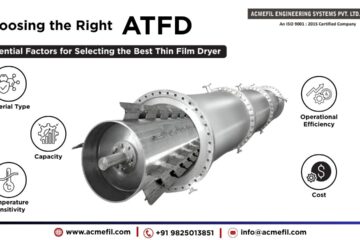
Selecting the appropriate ATFD system requires careful consideration of your specific application requirements, including feed characteristics, throughput needs, product specifications, and economic factors. The complexity of the decision often warrants consultation with experienced suppliers who can provide detailed technical analysis and recommendations.
The investment in ATFD technology represents a strategic decision that can significantly impact your production efficiency, product quality, and operational costs. The combination of superior performance, environmental benefits, and economic advantages makes ATFD systems an excellent choice for many industrial drying applications.
Understanding the fundamentals of thin film drying technology empowers you to make informed decisions about your drying processes. Whether you’re evaluating options for a new facility or considering upgrades to existing equipment, ATFD technology offers compelling advantages that deserve serious consideration.
For organizations seeking advanced industrial drying solutions, Acmefil Engineering Systems Pvt. Ltd. stands as a premier ISO 9001:2015 certified manufacturer with over three decades of expertise since 1992. Specializing in innovative ATFD systems, Acmefil delivers customized thin film drying solutions that combine cutting-edge technology with proven reliability. Our comprehensive range of agitated thin film dryers features superior heat transfer efficiency, robust construction using premium materials, and advanced automation systems that ensure consistent product quality while minimizing operational costs. With over 800 successful installations across India and a commitment to turnkey project execution, Acmefil provides complete engineering support from initial concept through commissioning, making them the trusted partner for industries requiring high-performance drying solutions that meet the most demanding specifications.