In the world of industrial drying technologies, finding an efficient and reliable solution for challenging materials is essential. The horizontal agitated thin film dryer (ATFD) stands out as a powerful system designed to handle viscous liquids, slurries, and pastes. This technology uses a unique thin film drying process to convert wet feedstock into dry, free-flowing powder continuously. If you need to process heat-sensitive materials or manage difficult waste streams, understanding how a horizontal ATFD works can unlock significant operational benefits.
Key Highlights
- A horizontal agitated thin film dryer is an advanced system for continuous drying of slurries, pastes, and wet cakes into a dry powder.
- The technology relies on mechanical agitation to create a thin film on a heated surface, ensuring efficient heat transfer.
- It is particularly effective for heat-sensitive products due to short residence times and uniform heating.
- This dryer is a key component in wastewater treatment, especially for achieving zero liquid discharge (ZLD) goals.
- The horizontal design offers unique advantages for handling high-viscosity materials compared to vertical models.
- Proper selection and maintenance are crucial for maximizing performance and operational longevity.
Overview of Horizontal Agitated Thin Film Dryer (ATFD)
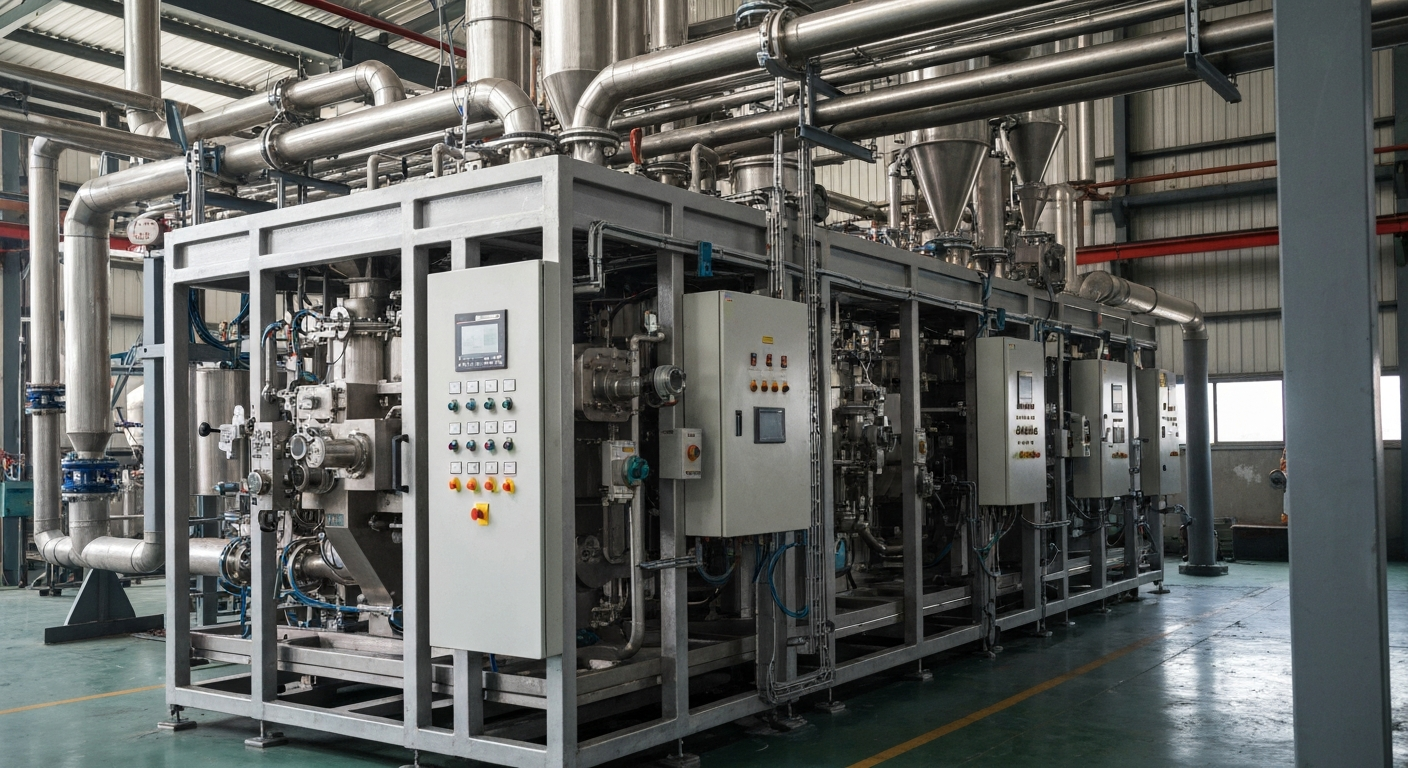 A horizontal agitated thin film dryer (ATFD) is an advanced industrial drying system known for its efficiency and compact design. This technology employs a horizontally oriented rotor with screw elements, ensuring both intense agitation and uniform heat transfer across the heated surface. Perfect for handling sensitive products, the ATFD minimizes feed material degradation by maintaining a short residence time. It plays a crucial role in various industries, particularly in wastewater treatment and food processing, by converting wet powders into dry solids effectively.
Defining Horizontal ATFD Technology and Its Importance
Horizontal agitated thin film dryer (ATFD) technology serves a critical role in various industrial applications. By utilizing a horizontal orientation, this advanced system ensures efficient drying of sensitive products such as wet cakes and slurries. The central rotor and heated surfaces create a thin film of feed material that enhances heat transfer rates, promoting uniform drying. Such efficiency in heat transfer not only improves product quality but also supports sustainability efforts through zero liquid discharge (ZLD) systems, making it vital for the food processing and wastewater treatment sectors.
Basic Working Principle of Horizontal ATFDs
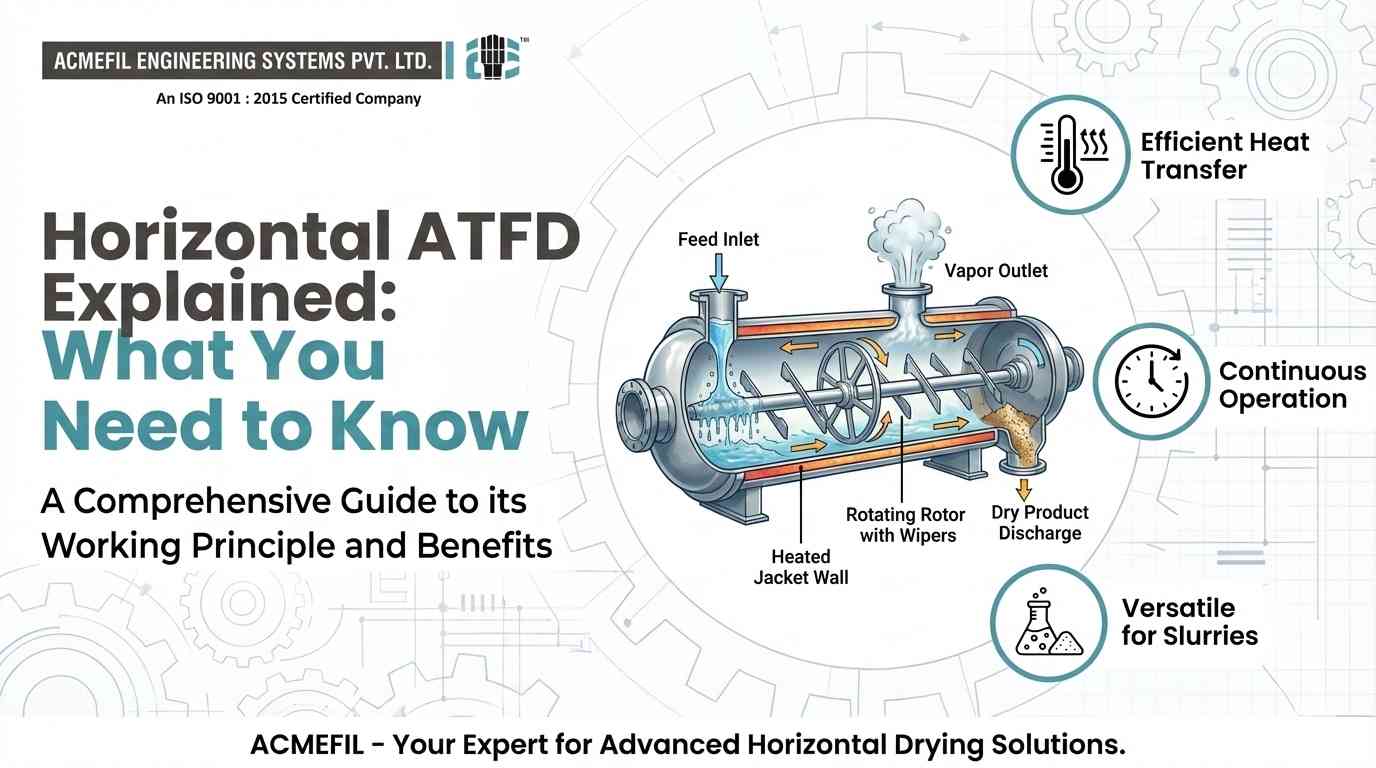
Utilizing horizontal orientation, these dryers efficiently convert wet powder into dry solids through a specialized process. Feed material is introduced onto a heated surface where a centrally located rotor, equipped with rotating agitator blades, ensures uniform thin film formation. Intense mechanical agitation maximizes heat transfer rates and maintains a short residence time, enhancing drying efficiency. With a heating jacket facilitating indirect heating, the energy consumption is reduced while achieving high heat transfer efficiency, critical for maintaining product quality across various industrial applications.
Key Components of a Horizontal ATFD System
Understanding the components of a horizontal agitated thin film dryer is key to appreciating its effectiveness. The system is built around a core mechanical structure that includes a cylindrical body, a rotor with specialized blades, and a heating jacket. Each part plays a critical role in the drying process.
The heating surface, provided by the jacket, delivers the thermal energy, while the rotor blades ensure the material is processed correctly. Let’s examine the primary components, including the rotor design and the product handling sections.
Core Mechanical Structure and Rotor Design
The core mechanical structure of a horizontal ATFD consists of a stationary cylindrical shell and a centrally located rotor. The shell is typically jacketed to allow a heating medium like steam or thermal oil to circulate and heat the inner wall.
At the heart of the system is the rotating agitator, or rotor. This component is fitted with rotor blades that are precisely designed to maintain a close clearance with the heated wall. This design is crucial for creating the thin film and preventing scale or fouling.
The mechanical agitation provided by the rotor ensures the entire product is uniformly exposed to heat. The blades also serve to move the material from the feed inlet to the discharge outlet, making the process continuous and efficient.
Heating Surface, Film Formation, and Product Outlet
The heating surface is the entire inner wall of the dryer’s cylindrical body. Its large area allows for excellent thermal contact with the product, promoting high heat transfer rates. A feed distributor at the inlet ensures the incoming material is spread evenly for consistent processing.
As the rotor spins, its blades create the thin film formation that is central to the ATFD’s operation. This thin layer maximizes the surface area of the product exposed to heat, allowing for rapid and uniform evaporation of moisture.
Finally, the dried material is conveyed to the product outlet at the far end of the dryer. From here, the dry powder or flakes are collected for disposal or reuse. The vapor generated during the process is removed through a separate nozzle.
Horizontal vs. Vertical ATFD Designs
When selecting a thin film dryer, you will encounter both horizontal and vertical designs. The choice between a horizontal agitated thin film dryer and a vertical agitated thin film dryer depends largely on your feed material and process goals. While both operate on similar principles, their structural differences have a significant impact.
The orientation of the dryer—whether horizontal or vertical—affects factors like material residence time, handling of viscous products, and floor space requirements. Let’s explore these differences and the unique benefits of the horizontal configuration.
Structural Differences and Their Impact on Operations
The most obvious difference is the orientation. A vertical thin film dryer stands upright, and material flows downward primarily due to gravity, assisted by the rotor. In contrast, the horizontal orientation relies entirely on mechanical agitation to move material along the dryer’s length.
This fundamental distinction influences how each dryer type handles different materials. The horizontal design provides more control over residence time, as it is not dependent on gravity. This makes it better suited for materials that require longer drying times or are highly viscous.
Here are some key impacts of these structural differences:
- Material Conveyance: Horizontal ATFDs use screw-like elements on the rotor to actively convey material, offering better control than the gravity-assisted flow in a vertical thin film dryer.
- Viscosity Handling: The horizontal design excels at processing thick pastes and wet cakes that might not flow properly in a vertical unit.
- Residence Time: Longer residence times are more easily achieved in horizontal models.
- Footprint: While often requiring more floor space, the horizontal orientation can fit in facilities with lower ceiling heights.
Advantages Unique to the Horizontal Configuration
The horizontal layout offers several distinct advantages that make it the preferred choice for specific applications. Its ability to handle a wider range of feed consistencies, from slurries to thick pastes, provides greater operational flexibility. This ensures efficient drying even as feed properties change.
The forced conveyance mechanism of the horizontal rotor ensures uniform heat transfer along the entire length of the dryer. This leads to a more consistent final product with low residual moisture, producing high-quality dry solids.
Key advantages of the horizontal design include:
- Superior Handling of Viscous Feeds: It can process materials that are too thick or sticky for vertical dryers.
- Better Control Over Residence Time: The rotor design allows for precise control over how long the material stays in the dryer.
- Continuous Operation: This configuration is ideal for seamless, continuous operation, converting wet feed into dry solids without interruption.
- Larger Throughput: Horizontal models can be designed for larger throughput and multi-pass flows.
Common Applications of Horizontal ATFDs in Indian Industry
The versatility of the horizontal agitated thin film dryer makes it valuable across many industrial processes in India. Its ability to handle diverse materials efficiently has led to its adoption in sectors ranging from pharmaceuticals and chemicals to food processing and environmental management.
One of its most significant roles is in wastewater treatment, where it helps industries meet stringent environmental regulations. We will explore its use in this area as well as in the production of chemicals, foods, and other high-value products.
Use in Wastewater Treatment and Zero Liquid Discharge Systems
In the field of wastewater treatment, the horizontal ATFD is a cornerstone technology for achieving zero liquid discharge (ZLD). Many industries generate liquid waste streams with high concentrations of salts or other contaminants that cannot be released into the environment.
The ATFD serves as the final drying stage in ZLD systems. After preliminary treatment and concentration in a multiple-effect evaporator (MEE), the resulting concentrate is fed into the ATFD. The dryer then evaporates the remaining water, turning the liquid waste into a dry, solid material.
This solid residue is much easier and cheaper to handle and dispose of compared to large volumes of liquid. By converting effluents into solids, ZLD systems with ATFDs help industries comply with environmental laws and promote water recycling.
Processing Chemicals, Pharmaceuticals, and Food Products
Beyond wastewater, the horizontal ATFD is critical in manufacturing processes where product quality is paramount. Its ability to operate under vacuum makes it suitable for drying sensitive products that would degrade at high temperatures.
In food processing, it is used to dry items like cocoa, flour, and natural sweeteners without losing flavor or nutritional value. For pharmaceuticals, it dries active pharmaceutical ingredients (APIs), intermediates, and other heat-sensitive compounds.
Common applications include:
- Chemicals: Drying catalysts, inorganic salts, pigments, and limestone.
- Pharmaceuticals: Processing APIs and intermediates where solvent recovery and low-temperature drying are needed.
- Food Processing: Producing dried material from fruit purees, dairy products, and extracts while preserving quality.
- Polymers: Synthesizing materials that require high-pressure applications.
Selecting the Right Horizontal ATFD: Factors to Consider
Choosing the correct horizontal agitated thin film dryer for your application is a critical decision that impacts efficiency, cost, and product quality. Several factors must be carefully evaluated to ensure the equipment meets your specific needs. These include the properties of your feed material, your required capacity, and long-term operational costs.
Beyond the technical specifications, supplier selection is equally important for ensuring reliable performance and support. Let’s break down the key considerations, starting with material compatibility and capacity planning.
Material Compatibility and Capacity Needs
First and foremost, you must assess material compatibility. The feed material’s characteristics, such as viscosity, solids content, and thermal sensitivity, will determine the ideal ATFD design and material of construction (MOC). Materials like stainless steel, Duplex SS, or Hastelloy are chosen based on the corrosiveness of the feed.
Next, you need to define your capacity needs. This involves specifying the feed rate (kg/hr) and the desired output of dry solids. The required heat transfer area of the dryer is directly related to the amount of moisture that needs to be evaporated.
Consider these points when evaluating your needs:
- Feed Properties: Is your feed a slurry, paste, or wet cake? What is its solids concentration?
- Product Requirements: What is the target residual moisture content in the final dry solids?
- Throughput: How many kilograms per hour of feed do you need to process?
- Scalability: Will your capacity needs grow in the future?
Energy Efficiency, Maintenance, and Supplier Selection
Energy efficiency is a major factor in the long-term operating cost of an ATFD. Look for designs that promise efficient heat transfer and low energy consumption. The ability to operate effectively with different heating media, like steam or thermal oil, also adds flexibility.
Proper maintenance is essential for longevity, so consider a design that allows for easy cleaning and replacement of parts. This leads directly to the importance of supplier selection. A reliable supplier will not only provide a high-quality machine but also offer excellent after-sales service and spare parts availability.
When choosing a supplier, ask about:
- Energy Consumption: What are the estimated energy requirements for your specific application?
- Maintenance: How easy is it to access and replace wear parts like blades and seals?
- Technical Support: Does the supplier offer installation, commissioning, and training services?
- Proven Experience: Can they provide case studies or references from similar applications?
Benefits of Using Horizontal Agitated Thin Film Dryers
The horizontal agitated thin film dryer offers numerous advantages that make it a superior choice for many industrial drying tasks. Its design promotes enhanced drying efficiency, resulting in a consistent dry powder with minimal operational hurdles. The large heat transfer area combined with intense agitation ensures uniform drying.
These benefits translate into higher product quality, better recovery rates, and significant cost savings over the equipment’s lifespan. We will now explore how this technology improves efficiency and reduces operational challenges.
Enhanced Drying Efficiency and Product Recovery
The primary benefit of a horizontal ATFD is its exceptional drying efficiency. The continuous agitation creates a thin, turbulent film, which maximizes the product’s exposure to the heated surface. This leads to rapid and efficient evaporation, significantly reducing processing time.
This process also ensures uniform drying across the entire batch of material. Because the product is constantly moving and being regenerated on the heated wall, hot spots are eliminated. This prevents overheating and thermal degradation, which is especially important for sensitive materials.
Furthermore, the design minimizes product holdup within the dryer, leading to high product recovery rates. The scraper mechanism ensures that almost all the material is discharged, reducing waste and maximizing yield, which is critical for high-value products.
Reduced Operational Issues and Cost Savings
Horizontal ATFDs are designed to minimize common operational issues like scaling and fouling. The rotor blades continuously scrape the heating surface, keeping it clean and maintaining high heat transfer efficiency. This reduces the need for frequent shutdowns for cleaning, leading to higher uptime.
These operational advantages result in significant cost savings. Reduced energy consumption, thanks to efficient heat transfer, lowers utility bills. Moreover, the short residence time and gentle handling lead to minimal product degradation, preventing loss of valuable material.
Here are some key ways horizontal ATFDs save you money:
- Lower Maintenance Costs: The anti-fouling design reduces cleaning frequency and labor.
- Reduced Energy Consumption: High thermal efficiency means less steam or oil is needed.
- Higher Product Yield: Minimal product degradation and high recovery rates maximize output.
- Continuous Operation: Less downtime means more production and higher profitability.
Operational Challenges in Horizontal ATFDs
While the horizontal agitated thin film dryer is a robust and efficient machine, it is not without its operational challenges. Issues such as scaling, fouling, and proper slurry handling require careful management to ensure smooth and continuous operation. Understanding these potential hurdles is the first step toward preventing them.
Proper equipment design, consistent feed properties, and a proactive maintenance strategy are key to overcoming these challenges. Let’s look at some of the common difficulties, starting with the handling of high-solids-content slurries.
Handling Slurries with High Solids Content
One of the main challenges is processing slurries with high solids content. As the material dries, it passes through several phases—from a liquid slurry to a thick paste and finally to a wet or dry powder. Each phase has different flow characteristics.
If the ATFD is not designed correctly, the material can become extremely sticky or thick in the intermediate phases, potentially overloading the rotor motor or causing blockages. The horizontal design with screw elements is specifically engineered to handle these transitions by actively conveying the material forward.
To manage high-solids slurries effectively:
- Ensure Proper Rotor Design: The rotor must have elements capable of handling the changing consistency of the material.
- Control Feed Rate: A consistent feed rate prevents sudden changes in viscosity inside the dryer.
- Monitor Motor Load: Keep an eye on the motor’s power consumption to detect potential overloads.
- Optimize Operating Temperature: The right temperature profile can help smooth the transition between the different phases of slurry.
Scaling, Fouling, and Maintenance Concerns
Scaling and fouling are persistent challenges in any thermal processing equipment. These issues occur when material deposits build up on the heat transfer surface, reducing efficiency and potentially damaging the equipment. Although ATFDs are designed to minimize this, it can still occur with certain materials.
Proper maintenance is the best defense against these problems. Regular inspections and cleaning routines are necessary to keep the dryer operating at peak performance. Having a good inventory of spare parts, especially for wear items like blades and seals, is also crucial for minimizing downtime.
Key maintenance considerations include:
- Regular Inspections: Check rotor blades for wear and ensure they maintain close clearance with the wall.
- Cleaning Procedures: Implement a schedule for cleaning the heating surface to prevent hard scale buildup.
- Lubrication: Properly lubricate bearings and the gearbox according to the manufacturer’s recommendations.
- Availability of Spare Parts: Keep critical components on hand to avoid long waits for replacements.
Essential Maintenance Requirements for ATFDs
To ensure the long-term reliability and efficiency of your horizontal agitated thin film dryer, a commitment to proper maintenance is non-negotiable. A well-structured maintenance plan helps prevent unexpected breakdowns, maintains product quality, and extends the life of the equipment. This involves regular inspection routines and cleaning schedules.
Beyond in-house efforts, having access to reliable service support from your supplier is also a critical part of a comprehensive maintenance strategy. Let’s look at the specific tasks involved in keeping your ATFD in top condition.
Regular Cleaning and Inspection Routines
Implementing regular cleaning and inspection routines is the foundation of ATFD maintenance. These tasks are designed to prevent the buildup of scale and fouling, which can severely reduce heat transfer efficiency and compromise product quality.
A typical inspection routine should include checking the rotor blades for wear, inspecting seals for any leaks, and listening for unusual noises from the gearbox or bearings. The frequency of these checks will depend on the nature of the material being processed and the intensity of operation.
Key maintenance activities include:
- Rotor and Blade Inspection: Verify that blades are not worn or damaged to ensure uniform film formation.
- Heating Surface Cleaning: Periodically clean the inner wall to remove any residue and maintain high heat transfer efficiency.
- Seal Checks: Inspect mechanical seals and gaskets to prevent leaks that could lead to product loss or contamination.
- Instrumentation Calibration: Ensure sensors for temperature and pressure are providing accurate readings for process control.
Spare Parts and Service Support Considerations
Effective ATFD maintenance also involves planning for spare parts and service support. Certain components, such as rotor blades, bearings, and seals, are subject to wear and will need periodic replacement. Having these spare parts in stock can dramatically reduce downtime.
When you are in the supplier selection phase, it is vital to inquire about their service support. A good supplier will offer comprehensive support, including installation, commissioning, operator training, and troubleshooting assistance. This partnership is crucial for long-term operational success.
Choosing a manufacturer that provides readily available parts and expert technical guidance ensures that your ATFD maintenance program is both effective and efficient. This proactive approach protects your investment and keeps your production running smoothly.
Leading Manufacturers and Suppliers of Horizontal ATFDs in India
Finding a reputable thin film dryer manufacturer is a crucial step in acquiring a horizontal agitated thin film dryer. In India, several companies specialize in designing and fabricating this advanced equipment. These Indian ATFD providers offer a range of solutions tailored to different industries and applications.
Choosing the right partner involves more than just comparing prices. You need to evaluate their experience, technical capabilities, and the quality of their after-sales support. Let’s explore the criteria for selecting a reliable vendor and the current trends among manufacturers.
Criteria for Choosing Reliable ATFD Vendors
The process of vendor selection for an ATFD should be thorough and systematic. Look for reliable suppliers with a proven track record in manufacturing high-quality drying systems. Their experience in your specific industry can be a significant advantage.
Product quality should be a top priority. This includes the material of construction, the precision of the engineering, and the robustness of components like the rotor and gearbox. Equally important is the level of service support the vendor provides, from initial consultation to long-term maintenance.
Here are some criteria to guide your choice:
- Technical Expertise: Does the vendor have in-house design and engineering capabilities to customize a solution for you?
- Manufacturing Quality: Ask to see their manufacturing facility or examples of past projects to assess their workmanship.
- After-Sales Service: Inquire about their policies on installation, training, spare parts, and troubleshooting support.
- Customer References: Request testimonials or contact information for existing customers to verify their reputation.
Trends and Innovations Among Indian ATFD Providers
Indian ATFD providers are continuously innovating to create a more efficient and reliable advanced industrial drying system. Key trends include enhancing energy efficiency, integrating advanced automation, and using superior materials to handle increasingly corrosive and difficult materials.
These innovations are driven by industry demands for lower operating costs, greater process control, and compliance with stricter environmental regulations. Many manufacturers are now offering ATFDs with PLC/SCADA-based automation for precise monitoring and remote operation.
The table below highlights some of the key trends and their benefits for users.
| Innovation Trend | Benefit for Users |
|---|---|
| Advanced Automation (PLC/SCADA) | Provides precise process control, remote monitoring, and improved safety. |
| Hybrid Designs | Combines ATFD technology with other systems for enhanced efficiency. |
| Use of Special Alloys | Improves corrosion resistance and extends equipment life when handling harsh chemicals. |
| Energy Recovery Systems | Reduces overall energy consumption by reusing waste heat from the process. |
Frequently Asked Questions
What types of materials can be processed in a horizontal ATFD?
A horizontal agitated thin film dryer can process a wide range of feed material. This includes liquids, slurries, pastes, and wet cake that are difficult for other dryers to handle. The thin film dryer efficiently converts this feed into a uniform dry powder, making it suitable for many industries.
How does the horizontal ATFD support zero liquid discharge?
A horizontal agitated thin film dryer is a key component in achieving zero liquid discharge. It takes the concentrated effluent from an evaporator and, through efficient evaporation, removes the remaining water. This process transforms the liquid discharge into a dried material, eliminating liquid waste and helping plants meet environmental regulations.
What routine maintenance is required for horizontal ATFD systems?
Proper maintenance for a horizontal ATFD includes regular cleaning of the heating surface and consistent inspection routines for rotor blades and seals. These ATFD maintenance tasks are crucial for preventing fouling, ensuring high heat transfer efficiency, and extending the life of the equipment.
What is Horizontal ATFD and how does it differ from other types of ATFDs?
A horizontal agitated thin film dryer is a type of thin film dryer with a horizontal orientation. Unlike a vertical agitated thin film dryer that relies on gravity, it uses mechanical agitation to convey material. This design offers better control over residence time and is superior for handling highly viscous materials.
Conclusion
In summary, understanding Horizontal Agitated Thin Film Dryers (ATFDs) is crucial for industries aiming to enhance their drying processes. The unique design of horizontal ATFDs offers significant advantages, including improved drying efficiency and effective product recovery while minimizing operational challenges. By carefully selecting the right system and adhering to proper maintenance protocols, businesses can optimize their operations and achieve substantial cost savings. If you have further questions or wish to explore how Horizontal ATFDs can benefit your specific application, get in touch with our team today for expert guidance and support.