When you need to dry heat-sensitive products, the right technology is crucial for maintaining quality. The drying process can be challenging, but a thin film dryer offers an effective solution. This equipment excels at gentle drying by using advanced heat transfer principles to turn liquids or slurries into dry powders. By creating a very thin layer of product on a heated surface, these dryers ensure quick and uniform drying, protecting the integrity of your valuable materials from start to finish.
Key Highlights
- A thin film dryer is essential for the continuous drying of heat-sensitive materials.
- The drying process involves spreading material into a thin product film on a heated surface for rapid evaporation.
- Efficient heat transfer and short residence times help maintain high product quality and prevent thermal degradation.
- An agitated thin film dryer uses rotating blades for consistent drying and enhanced performance.
- This technology improves energy efficiency compared to conventional drying systems.
- Thin film dryers are versatile, handling everything from liquids and slurries to pastes.
Understanding Thin Film Drying Technology
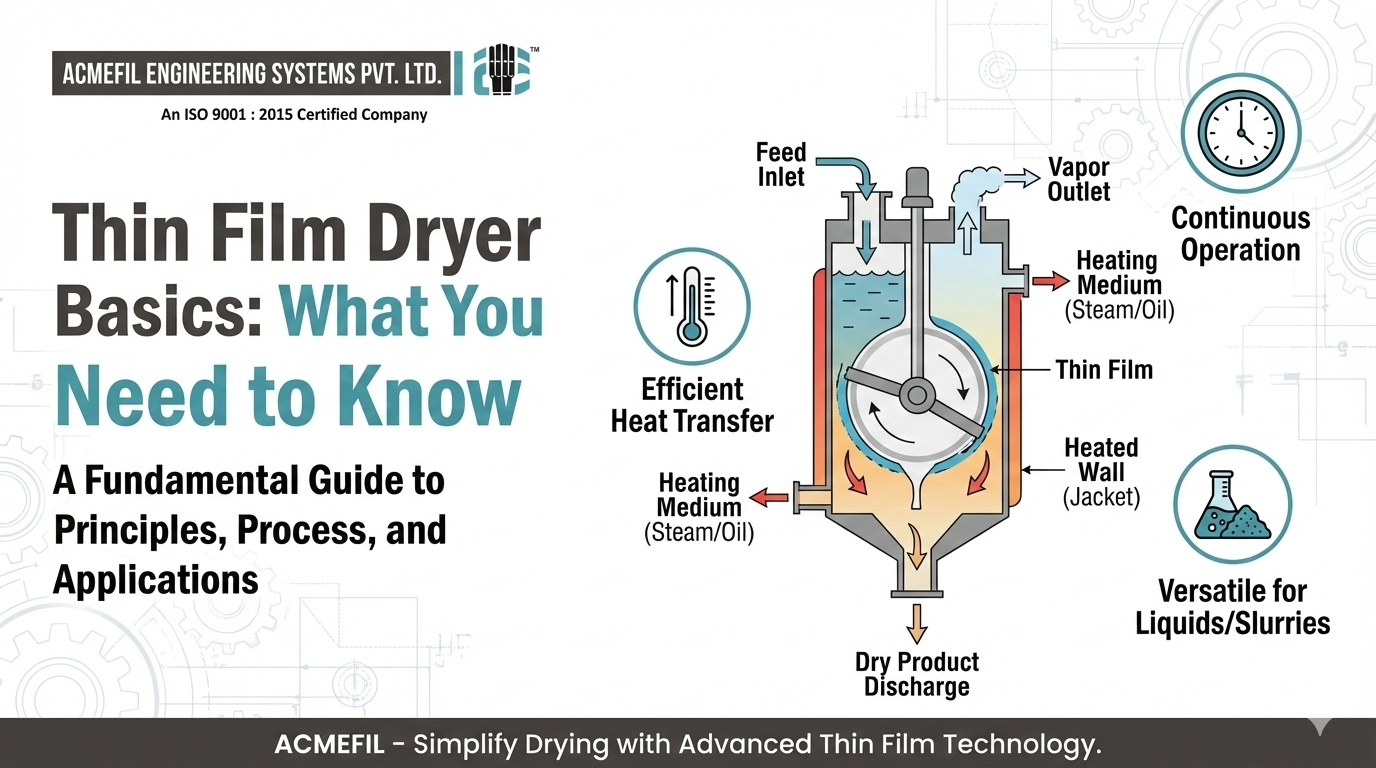
Thin film drying is a sophisticated method designed for efficiency and precision. The core of this technology lies in its ability to handle the drying process in a continuous and controlled manner. A thin film dryer works by distributing the wet feed material evenly across the inside of a heated cylinder, or heating jacket.
Specialized internal components then spread this material into a thin product film. This maximizes the surface area exposed to heat, leading to rapid and efficient evaporation. Below, we explore what a thin film dryer is and how its working principle makes it so effective for a wide range of applications.
What Is a Thin Film Dryer?
A thin film dryer is a type of contact dryer designed for the continuous processing of materials. It consists of a cylindrical heating jacket and an internal rotor equipped with special wiping elements or blades. This setup is engineered to handle a wide range of feed materials, including slurries, pastes, and other amorphous products that are difficult to process with conventional drying systems.
The primary function of this dryer is to transfer heat from the heated wall directly into the product. This contact-based heating is highly efficient and allows for precise temperature control, which is vital when working with delicate substances. The internal rotor ensures the material is constantly agitated and moved along the heated surface.
You can find these dryers in various sizes, from laboratory and pilot scales to large industrial units. They are often built from durable materials like stainless steel to meet the demanding requirements of different industries. The design focuses on transforming liquid or pasty substances into a dry powder or solid in a single, continuous step.
Typical Working Principle of Thin Film Dryers
The working principle of a thin film dryer is straightforward yet highly effective. It revolves around maximizing heat transfer to achieve rapid evaporation. The process begins when the wet feed material enters the dryer and is distributed evenly onto the heated inner surface of the evaporator wall.
A rotor with blades or wipers then spreads this material into a very thin product film. This action not only creates a large surface area for heat exchange but also generates turbulence, which further boosts the drying rate. As the product film moves through the dryer, the liquid content evaporates, and the vapors are removed through a separate outlet, often using a vacuum system.
This method allows for very short residence times, minimizing the risk of thermal degradation to the product. The continuous mechanical agitation prevents material buildup on the heated surface, ensuring consistent performance. The result is a uniformly dried product discharged at the end of the process.
| Step | Action |
|---|---|
| 1. Feeding | Wet material is introduced into the top of the dryer. |
| 2. Distribution | The material is spread evenly onto the heated wall. |
| 3. Film Formation | A rotor creates a thin, turbulent product film. |
| 4. Evaporation | Rapid heat transfer causes the liquid to evaporate. |
| 5. Discharge | The final dry product is collected at the bottom. |
Types of Thin Film Dryers
Thin film dryers are not a one-size-fits-all solution. They come in different designs to suit specific applications and material properties. The choice of dryer depends on factors like the consistency of the product, the required capacity, and the specific drying task. The two primary configurations are vertical and horizontal, each offering unique advantages.
Additionally, the agitated thin film dryer (ATFD) is a prominent type known for its high heat exchange rate and efficiency. Understanding the differences in these core components and designs will help you select the best option for your operational needs. Let’s look at the distinctions between vertical and horizontal models and the specific benefits of an ATFD.
Vertical vs. Horizontal Thin Film Dryers
The orientation of a thin film dryer—whether vertical or horizontal—plays a significant role in its application. A vertical thin film dryer is ideal for transforming liquids into solids in a single step. In this design, the product enters from the top and flows down the heated walls by gravity, while the rotor blades ensure it forms a thin film. This setup is excellent for achieving a final dry powder from a liquid feed.
On the other hand, a horizontal thin film dryer is more versatile and can handle a broader range of feed materials, including liquids, pastes, and even wet solids. The product is conveyed horizontally from the feed inlet to the discharge outlet. This design often allows for larger capacities and adjustable residence times, making it suitable for high-throughput operations and drying products that go through a sticky phase.
Key differences include:
- Feed Type: Vertical dryers are best for liquids, while horizontal arrangements handle liquids, pastes, and solids.
- Product Flow: Gravity assists product flow in vertical dryers, while mechanical conveyance moves product in horizontal dryers.
- Residence Time: Horizontal dryers offer more flexibility in adjusting residence time.
- Applications: Horizontal dryers are also used for solid particle cooling and product melting.
Agitated Thin Film Dryers (ATFD)
An agitated thin film dryer, or ATFD, is a highly efficient machine that uses mechanical agitation to enhance the drying process. The key feature is a rotor with special wiping elements or blades that continuously stir the material on the heated surface. This constant movement ensures uniform heat distribution and prevents the formation of crusts or hot spots, leading to consistent drying.
This technology is particularly beneficial for heat-sensitive products, as the combination of a vacuum environment and efficient heat transfer allows for lower drying temperatures. This helps prevent thermal degradation and preserves the quality of the final product. The agitation also speeds up the evaporation process, allowing for shorter residence times.
ATFDs are increasingly used for environmental applications, such as achieving zero liquid discharge by drying industrial sludge and waste materials. Key benefits include:
- Continuous and uniform drying process.
- Reduced thermal damage to heat-sensitive products.
- Ability to handle a wide range of feed materials, from solutions to slurries.
- High energy efficiency due to rapid heat transfer.
Frequently Asked Questions
What industries commonly use thin film dryers in India?
In India, thin film dryers are widely used across several key industries. These include food processing for drying ingredients, the pharmaceutical sector for dry active pharmaceutical ingredients, and the chemical industry. They are also essential in environmental applications for treating waste materials and in providing specialized engineering services for various processing needs.
What factors should be considered when selecting a thin film dryer?
When selecting a thin film dryer, consider the properties of your feed material, such as its viscosity and consistency. The required final moisture content of the product film is also crucial. Evaluate the necessary mass transfer and heat exchange rates, and choose the right type of dryer (vertical or horizontal) based on your specific application.
How does thin film drying improve energy efficiency in industrial processes?
Thin film drying boosts energy efficiency through extremely rapid heat transfer. Creating a thin layer of product maximizes the surface area exposed to heat, which significantly increases the heat exchange rate. This allows the drying process to be completed much faster and at lower temperatures, reducing overall energy consumption compared to conventional methods.
What is a thin film dryer and how does it work?
A thin film dryer is equipment used for continuous drying. It works by spreading a liquid or slurry into a thin layer on the inner surface of a heating jacket. A rotor with blades agitates this film, leading to rapid evaporation of moisture and leaving behind a dry product.
How do I determine the right specifications for a thin film dryer for my application?
To determine the right specifications, you should analyze your feed material and the desired characteristics of the final dry powder. Consider factors like capacity, operating pressure, and material of construction. Consulting with engineering services like Acmefil Engineering Systems Pvt. Ltd. can help you select a dryer that ensures optimal product quality.
What industries commonly use thin film dryers?
Thin film dryers are used in a variety of industries. These include food processing, chemical processing for precursors and intermediates, and the pharmaceutical industry for active ingredients. They are also vital for environmental applications like drying industrial sludge and other waste materials, turning them into manageable solids.
What are the advantages of using a thin film dryer over other drying methods?
The primary advantages include highly efficient heat transfer, which reduces energy use, and very short residence times, which cause minimal thermal degradation to the product. This makes them ideal for heat-sensitive materials. They also offer continuous operation and can produce a consistent, uniform dry product from various feed types.
Conclusion
In summary, understanding thin film dryer technology is crucial for optimizing industrial drying processes. By exploring the various types of thin film dryers and their specific applications, industries can enhance efficiency and reduce energy consumption. The principles behind this technology not only streamline operations but also offer significant advantages over traditional drying methods.
Whether you’re in the food, chemical, or pharmaceutical sector, thin film dryers can provide tailored solutions to meet your unique needs. If you have further questions or need assistance, get in touch with our experts to explore how thin film drying can benefit your operations.