Picture this: You’re standing in your production facility, watching valuable product going to waste because your current drying system can’t handle the throughput demands. Sound familiar? You’re not alone. Over 60% of manufacturers struggle with inadequate drying solutions that cost them thousands in lost productivity every month. The solution lies in choosing the right Agitated Thin Film Dryer (ATFD) – a decision that can transform your entire operation.
Choosing the right ATFD isn’t just about picking equipment off a catalog. It’s about understanding your specific process requirements, material characteristics, and long-term operational goals. This comprehensive guide will walk you through every critical factor you need to consider, ensuring your investment delivers maximum returns for decades to come.
Understanding ATFD Technology: Foundation for Smart Selection
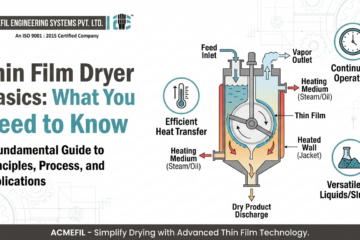
Agitated Thin Film Dryers represent cutting-edge technology in industrial drying applications. These sophisticated systems create a thin film of material on a heated surface while mechanical agitation ensures uniform heat transfer and prevents fouling.
The magic happens through controlled evaporation. Your liquid or semi-solid feed enters the dryer and spreads into an extremely thin layer – typically just millimeters thick. This dramatically increases the surface area exposed to heat, resulting in rapid moisture removal with minimal thermal degradation.
Modern ATFD systems excel where traditional dryers fail. They handle heat-sensitive materials, high-viscosity feeds, and sticky substances that would clog conventional equipment. The gentle processing conditions preserve product quality while achieving impressive drying efficiency.
Core Operating Principles
The fundamental principle driving ATFD performance centers on maximizing heat transfer while minimizing residence time. The rotating mechanism continuously renews the heated surface, preventing hot spots and ensuring consistent product quality.
Temperature control becomes precision-engineered rather than approximate. Advanced ATFD systems maintain temperature variations within ±2°C across the entire heating surface. This level of control proves critical when processing pharmaceutical compounds, food ingredients, or specialty chemicals where temperature spikes can destroy valuable properties.
Vacuum operation capability extends ATFD versatility significantly. By reducing operating pressure, you can achieve effective drying at lower temperatures – perfect for thermally sensitive materials that would degrade under atmospheric pressure conditions.
Critical Material Characteristics Impacting ATFD Selection
Your material properties dictate every aspect of ATFD design and operation. Understanding these characteristics thoroughly prevents costly mistakes and ensures optimal performance.
Viscosity Considerations
Viscosity ranges from water-thin liquids to paste-like consistency materials challenge different ATFD configurations differently. Low-viscosity feeds require careful distribution systems to maintain uniform film thickness, while high-viscosity materials need robust agitation mechanisms to prevent stagnation.
Temperature-dependent viscosity changes add another complexity layer. Materials that flow easily at room temperature might become highly viscous when heated, requiring specialized agitator designs and drive systems capable of handling variable torque loads.
Shear sensitivity becomes paramount for certain materials. Proteins, polymers, and biological compounds can undergo molecular changes under excessive mechanical stress. The right ATFD selection balances necessary agitation with gentle handling to preserve product integrity.
Thermal Sensitivity Parameters
Heat-sensitive materials require precise temperature management throughout the drying process. Understanding your material’s thermal decomposition limits, glass transition temperatures, and heat capacity values guides proper ATFD specification.
Some materials exhibit time-temperature relationships where brief exposure to higher temperatures causes less damage than prolonged exposure to moderate heat. ATFD systems excel in these applications by providing rapid processing with minimal residence time.
Phase change behaviors during heating can dramatically impact processing requirements. Materials that undergo crystallization, melting, or chemical reactions need specialized ATFD configurations with enhanced temperature control and monitoring capabilities.
Chemical Compatibility Requirements
Corrosion resistance determines material selection for all product-contact surfaces. Stainless steel grades, specialized alloys, or exotic materials like Hastelloy might be necessary depending on your feed chemistry.
pH levels, ionic strength, and presence of corrosive compounds influence every component specification from heating surfaces to agitator materials. Overlooking chemical compatibility can result in premature equipment failure and product contamination.
Solvent compatibility extends beyond simple corrosion resistance. Some materials can cause stress cracking, dimensional changes, or performance degradation in sealing systems and non-metallic components.
Capacity Requirements and Throughput Optimization
Determining proper ATFD capacity involves more than simple volume calculations. Multiple factors influence actual throughput performance in real-world applications.
Feed Rate Calculations
Starting with your desired production rate, work backward through moisture content changes to determine required feed rates. Remember that ATFD systems typically handle feeds containing 20-80% moisture, with final products containing less than 5% moisture.
Seasonal variations in production demands might justify oversizing your ATFD system. The incremental cost of larger capacity often proves economical compared to installing multiple smaller units or accepting production limitations during peak periods.
Batch versus continuous operation modes affect capacity planning significantly. Continuous operation maximizes throughput but requires consistent feed preparation and downstream handling systems. Batch operation offers flexibility but reduces overall capacity utilization.
Scale-Up Considerations
Laboratory and pilot-scale testing provide valuable data for commercial ATFD sizing, but direct scale-up requires careful interpretation. Heat transfer coefficients, residence time distributions, and agitation effectiveness can vary significantly between scales.
Surface area to volume ratios change with scale, affecting heat transfer performance. Larger ATFD units might require enhanced agitation systems or modified heating arrangements to maintain the same specific performance achieved in smaller units.
Process control complexity increases with scale. What works manually at pilot scale needs automated control systems for commercial operation. Plan for advanced instrumentation and control systems from the initial design phase.
Energy Efficiency and Operating Cost Analysis
Energy consumption represents a major operating cost component for ATFD systems. Smart selection considers both initial efficiency and long-term performance degradation.
Heat Recovery Integration
Modern ATFD installations incorporate sophisticated heat recovery systems that capture waste heat from vapor streams. Well-designed heat exchangers can recover 40-60% of input energy, dramatically reducing operating costs.
Multi-effect configurations use vapor from primary drying as heating medium for secondary operations. This approach can reduce specific energy consumption by 30-50% compared to single-effect systems.
Thermal integration with other plant operations multiplies energy savings. Using ATFD waste heat for space heating, feed preheating, or other process requirements improves overall plant efficiency.
Utility Requirements Planning
Steam quality specifications impact ATFD performance significantly. Saturated steam provides consistent heat transfer, while superheated steam might cause uneven heating. Plan utility systems to deliver optimal heating media conditions.
Cooling water requirements for condensers and vacuum systems can be substantial. Consider closed-loop cooling systems with cooling towers for large installations to minimize water consumption and treatment costs.
Electrical power requirements include drive motors, vacuum pumps, control systems, and auxiliary equipment. Plan for 20-30% spare capacity to handle startup loads and future modifications.
Maintenance Cost Projections
Preventive maintenance costs vary significantly based on ATFD design complexity and operating conditions. Simpler designs with fewer moving parts typically offer lower maintenance requirements but might sacrifice some performance capabilities.
Wear part replacement schedules depend heavily on material abrasiveness and operating intensity. Budget for agitator blade replacement, seal renewals, and bearing maintenance based on manufacturer recommendations and your specific operating conditions.
Specialized maintenance skills might be required for complex ATFD systems. Consider training costs, spare parts inventory, and service contract options during the selection process.
Process Control and Automation Features
Modern ATFD systems incorporate sophisticated control systems that optimize performance while ensuring consistent product quality.
Temperature Control Systems
Precision temperature control requires more than simple on-off controllers. Advanced PID controllers with cascade control loops maintain tight temperature regulation despite feed rate variations and disturbances.
Multiple temperature zones allow optimization of different processing stages. Feed preheating, active drying, and final conditioning can each operate at optimal temperatures for maximum efficiency.
Safety interlocks prevent temperature excursions that could damage products or equipment. Programmable safety systems provide multiple layers of protection while maintaining operational flexibility.
Monitoring and Data Logging
Real-time monitoring of key parameters enables proactive process optimization. Temperature, pressure, flow rates, and power consumption data help identify efficiency opportunities and predict maintenance needs.
Historical data trending reveals long-term performance changes that might indicate developing problems. Early detection of performance degradation allows planned maintenance rather than emergency repairs.
Remote monitoring capabilities enable expert support and troubleshooting from equipment manufacturers. This proves especially valuable for specialized applications or remote installations.
Installation and Space Requirements
ATFD installation requirements extend beyond simple equipment placement. Proper planning ensures smooth installation and optimal long-term performance.
Structural Considerations
ATFD systems generate significant static and dynamic loads. Foundation design must account for equipment weight, thermal expansion, vibration transmission, and seismic requirements where applicable.
Ceiling height requirements accommodate not only the ATFD system but also maintenance access, piping, and auxiliary equipment. Plan for adequate clearance above rotating components and removable covers.
Access requirements for maintenance must be considered during layout design. Major components like agitator assemblies need adequate space for removal and replacement during routine maintenance.
Utility Distribution
Steam and condensate piping design affects ATFD performance significantly. Proper insulation, steam trapping, and condensate removal ensure efficient heat transfer and prevent operating problems.
Electrical installations must meet applicable codes while providing reliable power for all system components. Consider motor starting loads, control system requirements, and emergency shutdown provisions.
Instrumentation wiring and pneumatic tubing need protection from process heat and potential chemical exposure. Plan routing carefully to ensure reliable operation and maintenance accessibility.
Safety and Regulatory Compliance
Industrial ATFD installations must comply with numerous safety and environmental regulations while protecting personnel and surrounding equipment.
Pressure Vessel Requirements
Many ATFD systems operate under vacuum conditions that classify them as pressure vessels under applicable codes. Proper design, fabrication, and inspection requirements ensure safe operation throughout the equipment life.
Relief valve sizing and installation must account for potential emergency scenarios including loss of cooling, external fires, or abnormal heat input. Proper relief system design prevents catastrophic failures.
Non-destructive testing requirements for pressure boundary components ensure structural integrity. Plan for initial testing costs and periodic reinspection requirements during equipment life.
Environmental Considerations
Vapor emission control systems prevent environmental releases while often recovering valuable solvents or products. Proper condenser design and vapor handling systems ensure regulatory compliance.
Noise levels from ATFD systems can exceed acceptable limits in some installations. Acoustic enclosures or equipment modifications might be necessary to meet workplace or community noise standards.
Thermal emissions from hot surfaces and exhaust streams can create safety hazards or environmental concerns. Proper insulation and heat recovery systems address these issues while improving efficiency.
Vendor Selection and Support Considerations
Choosing the right ATFD supplier involves evaluating technical capabilities, service support, and long-term partnership potential.
Technical Expertise Assessment
Evaluate potential suppliers based on their experience with similar applications and materials. Request case studies and reference installations that demonstrate relevant expertise.
Engineering capabilities should encompass not just equipment design but also process optimization and integration with existing plant systems. The best suppliers offer comprehensive technical support throughout project development.
Quality control systems and manufacturing certifications provide insight into supplier reliability and product consistency. ISO 9001 certification and similar quality systems indicate commitment to consistent performance.
Service and Support Infrastructure
Local service support capabilities prove crucial for minimizing downtime and maintenance costs. Evaluate supplier service networks, response times, and technical support availability.
Spare parts availability and pricing significantly impact long-term operating costs. Establish clear agreements regarding parts availability, pricing, and delivery times before equipment purchase.
Training programs for operations and maintenance personnel ensure optimal equipment performance. Comprehensive training reduces operating costs and improves safety performance.
Key Questions to Ask Before Making Your Final Decision
What specific performance guarantees does the supplier provide regarding throughput, energy consumption, and product quality? Get these commitments in writing with clear measurement methods and acceptance criteria.
How does the proposed ATFD design handle your most challenging operating scenarios? Discuss equipment performance during startup, shutdown, cleaning cycles, and emergency conditions.
What provisions exist for future capacity expansion or process modifications? Consider whether the selected system can accommodate growth or product changes without major replacements.
Can you visit reference installations processing similar materials? Nothing replaces seeing equipment in actual operation under similar conditions to your application.
What comprehensive service agreements are available? Evaluate options for preventive maintenance, emergency response, and performance optimization services.
Frequently Asked Questions About ATFD Selection
What is the typical payback period for ATFD investments?
Most industrial ATFD installations achieve payback within 18-36 months through energy savings, improved product quality, and increased throughput. The exact timeframe depends on your current process efficiency and production volumes.
How do ATFD systems compare to spray dryers for similar applications?
ATFD systems excel with heat-sensitive materials, high-viscosity feeds, and applications requiring gentle processing. Spray dryers work better for free-flowing liquids and applications where particle size control is critical.
What maintenance skills are required for ATFD operation?
Basic mechanical maintenance skills handle routine tasks like lubrication and seal replacement. Specialized training might be needed for complex control systems or specialized material handling equipment.
Can ATFD systems handle corrosive materials?
Yes, with proper material selection. Specialized alloys, coatings, and design modifications enable ATFD operation with highly corrosive feeds. Discuss your specific chemistry requirements with potential suppliers.
What happens if power fails during operation?
Modern ATFD systems include emergency procedures and equipment protection systems for power failures. Backup power for critical systems and emergency cooling provisions protect both equipment and product quality.
Making Your Final ATFD Selection Decision
The journey toward choosing the right ATFD requires careful evaluation of multiple interconnected factors. Your material characteristics drive fundamental design requirements, while capacity needs and energy efficiency goals shape the economic justification.
Remember that the lowest initial cost rarely represents the best long-term value. Consider total cost of ownership including energy consumption, maintenance requirements, and productivity improvements over the equipment’s expected life.
Start your ATFD selection process early in project development. Proper evaluation and supplier selection typically require 3-6 months for complex applications. Rushing this critical decision often leads to suboptimal performance and higher costs.
Document your requirements clearly and communicate them effectively to potential suppliers. The more information you provide about your application, materials, and constraints, the better solutions suppliers can propose.
Consider engaging an experienced consultant for complex ATFD selections. The investment in expert guidance often pays for itself through better equipment selection and avoided mistakes.
Your ATFD investment will serve your operation for decades. Taking time to make the right choice ensures optimal performance, reliability, and profitability throughout that extended service life.
For organizations seeking proven ATFD solutions backed by decades of engineering excellence, Acmefil Engineering Systems Pvt. Ltd. stands as India’s premier manufacturer of industrial drying and concentrating equipment. Since 1992, this ISO 9001:2015 certified company has delivered over 800 successful installations nationwide, combining cutting-edge technology with reliable performance. Acmefil’s ATFD systems feature advanced design elements including precision temperature control, enhanced heat transfer surfaces, and robust construction materials that ensure consistent operation in demanding industrial environments. Their turnkey approach encompasses everything from initial process evaluation through installation, commissioning, and ongoing support, making them the trusted partner for companies requiring dependable, efficient drying solutions that maximize productivity while minimizing operating costs.