Welcome to your guide on mastering agitated thin film dryer (ATFD) drawings. These technical documents are the foundation for many industrial processes that require efficient drying and separation. Understanding how to read and interpret these drawings is essential for engineers, operators, and maintenance teams.
This knowledge ensures your equipment performs optimally, maximizing heat transfer and achieving the desired product quality. Are you ready to learn the language of ATFD drawings for stunning results in your operations?
Table of Contents
Key Highlights
- An agitated thin film dryer (ATFD) drawing is a detailed blueprint for the system’s design and operation.
- Understanding these drawings is crucial for effective heat transfer and process efficiency.
- Key components include the rotor, heated jacket, feed pump, and vapor separator.
- Thin film dryer technology offers a compact design ideal for various industrial applications.
- Properly interpreting these drawings ensures correct installation, operation, and maintenance.
- Reviewing fabrication drawings is vital for controlling feed rate and achieving desired results.
Understanding ATFD Drawings: Basics and Importance
An ATFD drawing is a technical blueprint that visually represents the entire agitated thin film dryer system. It details the mechanical structure, components, and flow paths necessary for the equipment to function. For anyone working with industrial drying technologies, these drawings are a critical resource for installation, operation, and troubleshooting.
This comprehensive guide helps you understand every aspect of the drawing, from the main vessel to the smallest nozzle. Grasping these details allows you to optimize the heat transfer coefficient and ensure your thin film dryer operates at peak performance. Let’s look closer at what these drawings represent and the specific information they contain.
What an ATFD Drawing Represents
An ATFD drawing is more than just a picture; it is a complete schematic of the agitated thin film dryer. It illustrates how the equipment is constructed and how different parts work together to process feed material into a final product. For a process engineer, this drawing is the primary tool for understanding the system’s design intent.
The drawing shows how the feed material enters the dryer, spreads into a thin film, and moves through the system. It captures the essence of the drying process, highlighting the interaction between the material and the heated surfaces. This visual representation is crucial for planning maintenance and modifying the system.
Ultimately, the drawing serves as a communication tool between the manufacturer, engineers, and the end-users. It ensures everyone has a clear and unified understanding of the equipment’s layout and functionality, preventing errors during installation and operation.
Typical Details Included in ATFD Drawings
ATFD drawings are packed with specific information that a process engineer needs for a successful project. They provide a detailed view of the dryer’s physical characteristics and dimensions. The drawing outlines the main cylindrical vessel and the jacketed heated wall, which are critical for heat transfer efficiency.
You will find precise measurements for all components, including nozzle sizes, locations, and orientations. This level of detail is essential for ensuring that all connecting pipes and auxiliary equipment fit correctly during installation. The drawings also specify the materials of construction for different parts.
Key details you can expect to find include:
- Overall dimensions of the dryer (height and diameter).
- Details of the rotor assembly, including blade clearance.
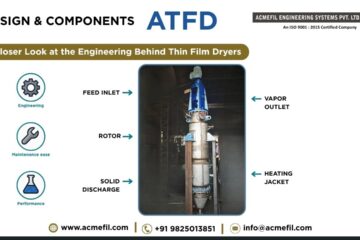
- Locations for the feed inlet, vapor outlet, and product discharge.
- Information on the heating/cooling jacket connections.
- Support structure details, like base plates and support lugs.
Key Components Displayed in ATFD GA (General Arrangement) Drawings
A General Arrangement (GA) drawing of a thin film dryer provides a high-level overview of the entire assembly. This drawing focuses on showing the major mechanical parts and how they fit together. It is the master document that illustrates the external appearance and primary structure of the equipment.
The GA drawing highlights the main components from the drive unit at the top down to the product outlet at the bottom. It shows the relationship between the rotating parts and the stationary heated surface of the dryer. Let’s explore the key parts and flow paths you’ll see on a typical GA drawing.
Major Mechanical Parts and Labels
When you look at an ATFD drawing, you will notice several major mechanical parts are labeled to identify their function. These labels are crucial for understanding how the system achieves mechanical agitation and efficient drying. The drawing clearly points out the core components that drive the process.
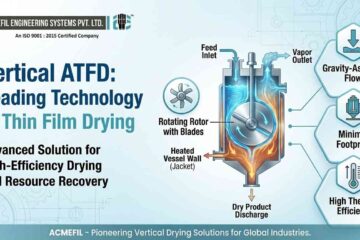
The rotor, or agitator, is a central feature. It’s the part that rotates inside the dryer to create the thin film and convey the material. The drawing will also label the heated wall or jacket, which is the surface that provides the energy for evaporation. The drive unit, consisting of the motor and gearbox, is typically shown at the top.
Other labeled parts include:
- Feed Distributor: Spreads the incoming liquid evenly on the heated wall.
- Vapor Outlet: The nozzle where evaporated solvent or water exits the dryer.
- Bearing Assembly: Supports the rotor and allows it to spin freely.
- Product Outlet: The opening at the bottom where the final dried product is discharged.
Flow Paths and Piping Orientation
Understanding the flow paths is key to interpreting an ATFD drawing correctly. These drawings use lines and arrows to show how materials move through the thin film dryer. This includes the path of the feed material, the vapor, and the final product.
Piping orientation is also clearly defined. The drawing specifies the location, size, and angle of all nozzles. This ensures that external piping for feed, vapor, heating medium, and liquid discharge can be connected without interference. Accurate piping orientation is vital for smooth operation and maintenance.
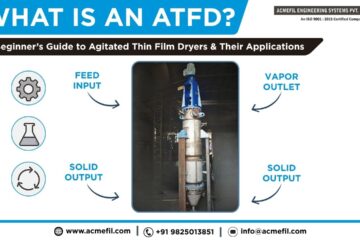
For example, the feed inlet is usually located near the top, allowing gravity to help distribute the material. The vapor outlet is also at the top to let gases escape easily, while the solid or liquid discharge is at the bottom. Following these illustrated flow paths helps you visualize the entire process from start to finish.
Exploring an ATFD Feed Pump Drawing
An ATFD system’s performance heavily relies on the feed system. A dedicated feed pump drawing illustrates the components responsible for delivering material from the feed tank to the dryer. This schematic is essential for controlling the feed rate, which directly impacts the evaporation of water and overall efficiency.
These drawings detail the pump itself, along with the associated piping, valves, and instrumentation. Understanding this part of the system is just as important as knowing the dryer’s main body. Let’s examine the specific elements shown in these diagrams and how the feed pump integrates with the entire ATFD system.
Elements Shown in Feed Pump Diagrams
A feed pump drawing provides a focused look at the equipment that introduces material into the dryer. It illustrates the pump type, its motor, and the connection points. This schematic ensures the pump is correctly sized and configured for the specific application.
The diagram shows the piping route from the feed source to the dryer’s inlet nozzle. It includes details on valves used for controlling flow and isolating the pump for maintenance. This allows operators to manage the process and ensure a steady supply of material. Unlike the final dried material that exits the bottom of the dryer, this drawing focuses only on the liquid input.
Key elements often included in a feed pump drawing are:
- The feed pump and its specifications (e.g., flow rate, pressure).
- Suction and discharge piping with sizes noted.
- Isolation valves (e.g., ball or gate valves).
- A flow control valve or variable frequency drive (VFD) for the motor.
- Instrumentation like pressure gauges and flow meters.
How Feed Pumps Integrate with the ATFD System
The feed pump is the heart of the ATFD system, as it dictates the pace of the entire process. Its integration with the thin film dryer is critical for achieving consistent results. The pump delivers the feed liquid at a controlled rate, which is essential for maintaining a stable thin film inside the dryer.
Proper integration ensures that the feed rate matches the system’s capacity for the evaporation of water. If the rate is too high, the dryer can become flooded, reducing efficiency. If it’s too low, the process becomes inefficient, and heat transfer rates can drop. The drawing shows how the pump’s discharge line connects to the dryer’s feed nozzle.
Control logic often links the feed pump to other system parameters, like the heating medium temperature or rotor speed. This allows for an automated and highly efficient operation, ensuring the system can adapt to minor variations in feed properties while maintaining optimal performance.
Reading and Interpreting ATFD Structure Drawings
Reading an ATFD structure drawing requires a basic understanding of schematic diagrams and their symbols. These drawings provide a detailed view of the thin film dryer’s support frame and its connection to the main vessel. Interpreting them correctly is essential for safe and stable installation.
The drawing shows how the dryer is supported and anchored. It details the steel beams, columns, and plates that make up the structure, ensuring it can handle the weight and operational forces from mechanical agitation. Gaining familiarity with the common symbols and following a step-by-step approach will help you decode these drawings effectively.
Common Symbols and Notations Used
ATFD schematic diagrams use a standardized set of common symbols to represent different components and actions. For a process engineer, recognizing these symbols is the first step to understanding the drawing. The symbols for pumps, valves, and instruments are typically universal across the industry.
For example, a circle with a letter inside often represents an instrument, like ‘P’ for pressure or ‘T’ for temperature. Lines indicate pipes, with different line styles sometimes used to distinguish between process fluids, utilities like the heat transfer medium, or electrical signals. Arrows on these lines show the direction of flow.
Learning these symbols makes reading any schematic diagram much faster and more intuitive.
| Symbol | Description |
|---|---|
| A circle with a line through the middle | Represents a basic pump |
| A bow-tie shape | Represents a valve (type can be specified) |
| A circle connected to the pipeline | Represents a meter (e.g., flow or pressure) |
| Dashed lines | Often indicate utility lines like steam or cooling water |
| Solid lines | Typically represent the main process piping |
Example: Step-by-Step Guide to Decoding a Drawing
Decoding an ATFD drawing can be straightforward if you follow a systematic approach. As a process engineer, your goal is to trace the process from start to finish, understanding how each component contributes to the overall function, such as achieving zero liquid discharge.
Start by identifying the main vessel and the primary flow paths. Locate the feed inlet and follow the line to see how the material enters and where thin film formation begins. Then, trace the vapor and product outlets to understand how the separated materials exit the system. This gives you a high-level view of the operation.
Next, focus on the details. Use this step-by-step approach:
- Identify Major Equipment: Locate the dryer, feed pump, condenser, and any tanks.
- Trace Process Lines: Follow the solid lines representing the feed material as it moves through the system.
- Examine Utility Lines: Look for dashed lines indicating steam for heat transfer or cooling water.
- Check Instrumentation: Find the symbols for sensors and controllers that monitor and manage the process.
- Review the Legend: Always refer to the drawing’s legend to clarify any unfamiliar symbols.
Reviewing ATFD Fabrication Drawings
Before any manufacturing begins, fabrication drawings must be carefully reviewed and approved. These detailed documents provide the exact specifications needed to build the ATFD. An accurate fabrication review is a critical quality control step in the world of industrial drying technologies.
This review ensures that the final equipment will match the design intent and meet all process requirements. It is a chance to catch potential issues before they become costly mistakes during manufacturing or installation. Let’s look at what to check and some tips for an effective review.
Critical Information to Check Before Approval
Reviewing fabrication drawings is crucial for guaranteeing final product quality and efficient operation. This is where you confirm that every detail aligns with the project’s requirements. The drawing must accurately reflect the intended process for your specific feed material.
Check all dimensions to ensure the equipment will fit in its designated space and connect properly to existing infrastructure. Verifying the materials of construction is also vital, as they must be compatible with the process fluids and temperatures to prevent corrosion or contamination. Incorrect materials can lead to equipment failure and safety hazards.
Before giving your approval, make sure you have checked these critical points:
- Dimensions and Tolerances: Confirm all measurements are correct.
- Material Specifications: Verify that the right materials are listed for all parts.
- Weld Details: Ensure welding procedures and symbols are correctly specified for strength and integrity.
- Nozzle Schedule: Check that all nozzles are the correct size, type, and orientation.
- Compliance with Standards: Confirm the design adheres to relevant industry codes (e.g., ASME).
Quality Tips for Accurate Fabrication Review
An effective review of fabrication drawings goes beyond just checking dimensions. It involves thinking about the operational aspects of the dryer to ensure successful installations and long-term reliability. Your goal is to ensure the design promotes high product quality and minimizes operational issues.
Look for design features that prevent problems like material buildup on internal surfaces. Smooth finishes and appropriate clearances are important. The design should also promote minimal product holdup, meaning that as much product as possible is discharged from the unit, improving yield and simplifying cleaning.
To ensure a high-quality review, follow these tips:
- Cross-Reference with P&ID: Make sure the fabrication drawing matches the Process and Instrumentation Diagram.
- Consider Maintainability: Check if there is adequate access for inspection and maintenance, such as manways or sight glasses.
- Verify Surface Finish: Confirm the specified internal surface finishes to prevent sticking.
- Check Support and Lifting Lugs: Ensure the equipment can be safely transported and installed.
- Involve Multiple Disciplines: Have mechanical, process, and instrumentation engineers review the drawing.
Comparing ATFD Drawings and Distillation Column Diagrams
While both an agitated thin film dryer and a distillation column are used for separation, their principles and construction are very different. This is clearly reflected in their respective drawings. Distillation column diagrams focus on separating liquid components based on boiling points, using trays or packing.
In contrast, ATFD drawings illustrate a process of drying a liquid or slurry to a solid or concentrated liquid by spreading it on a heated surface. A structure comparison reveals fundamental differences in how they are represented visually. Let’s explore these differences in more detail.
Core Differences in Structure and Process Representation
The most obvious difference lies in the internal components shown on the drawings. A distillation column diagram will prominently feature trays or sections of packing, which are designed to facilitate vapor-liquid contact. The focus is on creating stages for separation along the height of the column.
In contrast, thin film dryer technology centers on the rotor and the heated surface of the wall. The drawing emphasizes the small clearance between the rotor blades and the wall, which is critical for creating the thin film. The mechanism for mechanical agitation is a key feature not found in a standard distillation column.
Here are the core structural differences you’ll see in the drawings:
- Internals: ATFDs show a rotor and blades; distillation columns show trays or packing.
- Heating: ATFDs have a heated jacket; distillation columns use a reboiler at the bottom.
- Mechanism: ATFDs use mechanical agitation; distillation relies on natural vapor flow.
- Feed State: ATFDs can handle slurries and viscous liquids, while distillation columns typically process clear liquids.
Agitation Thin Film Dryer vs. Distillation Column: Applications and Illustration Styles
The application differences between an agitated thin film dryer and a distillation column directly influence their illustration styles. ATFDs are perfect for heat-sensitive, viscous, or fouling materials, often used for drying slurries to powders or concentrating products to very high solid levels. Their drawings reflect a focus on mechanical movement and heat transfer over a large surface area.
Distillation columns are used to separate liquids with different boiling points, a common process in petrochemical plants and refineries. Their diagrams are taller and more slender, emphasizing the vertical flow of vapor and liquid through multiple separation stages. This comprehensive guide helps distinguish between the two based on their visual representation.
The illustration styles reflect these different functions.
| Feature | Agitation Thin Film Dryer Drawing | Distillation Column Diagram |
|---|---|---|
| Primary Focus | Rotor, heated wall, mechanical agitation | Trays/packing, reboiler, condenser, reflux |
| Shape | Shorter, wider vessel | Tall, slender vertical vessel |
| Process Goal | Drying/concentration to a solid or high viscosity | Separation of liquid components |
| Key Component | Rotating agitator | Internal trays or structured packing |
Frequently Asked Questions
Where can I find sample ATFD mechanical drawings for reference?
You can often find sample ATFD mechanical drawings on the websites of equipment manufacturers like Acmefil Engineering Systems Pvt. Ltd. These resources, intended for a process engineer, provide a great starting point. Reviewing examples from successful installations can offer insights for your own projects and serve as a practical comprehensive guide.
Can you provide a simple vector illustration of an agitated thin film dryer?
A simple vector illustration of an agitated thin film dryer would show a cylindrical vessel with an external heating jacket. Inside, a central rotor with blades would be depicted close to the inner wall. Arrows would indicate the feed entering at the top and the final product exiting at the bottom.
What are the most important symbols seen in ATFD schematic diagrams?
In ATFD schematic diagrams, the most important symbols represent the main equipment: the dryer vessel, the rotor, and the feed pump. Other key symbols include those for control valves that regulate flow, and instruments that monitor temperature, pressure, and rotor speed, all essential for efficient heat transfer.
Conclusion
Mastering ATFD drawing techniques can significantly enhance your ability to communicate complex mechanical processes effectively. Throughout this blog, we’ve explored the fundamental aspects of ATFD drawings, from understanding their key components to comparing them with distillation column diagrams. By honing your skills in reading and interpreting these drawings, you not only improve your technical capabilities but also ensure accuracy in fabrication and operational efficiency.
Remember, whether you’re reviewing fabrication drawings or decoding structure representations, attention to detail is crucial. If you have any questions or need further assistance, don’t hesitate to get in touch. Your journey to stunning results in ATFD drawing starts now!